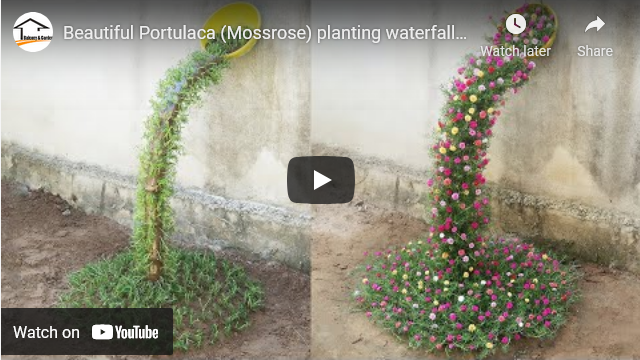
How to Make a Portulaca Waterfall Planter for Bright Summer Color
Portulaca is almost made for a waterfall planter.
These low-growing flowers spread over the edges of pots, bloom in bright colors, and handle heat better than many common annuals. Stack or stagger a few containers, plant portulaca near the rims, and the flowers can look as if they’re pouring from one pot into the next.
The best part is that you don’t need a large yard. A portulaca waterfall planter can fit on a sunny patio, beside a walkway, or near a garden entrance.
There is one important trick, though. Portulaca likes good drainage. The planter needs to look like a waterfall without actually holding a lot of water around the roots.
Why Portulaca Works So Well in Pots
Portulaca is often sold as moss rose. Many garden varieties are forms of Portulaca grandiflora or ornamental hybrids.
It stays fairly low and spreads outward instead of growing into a tall plant. Its stems can drape over rocks, walls, hanging baskets, and container edges.
That growth habit is exactly what we want for a waterfall planter.
Portulaca also has fleshy, succulent-like leaves and stems. These help it handle dry weather. It grows best in warm conditions and strong sunlight.
The flowers come in a long list of colors, including:
- Purslane Apricot
- Pink
- Red
- Yellow
- Orange
- White
- Peach
- Purslane SeaGlass Pink Lady
- Purple
- Magenta
- Sundial Fuchsia Portulaca
- Mixed and bicolor combinations
Some types have simple single flowers. Others have fuller blooms that almost look like tiny roses.
What You’ll Need
You can make this project as simple or fancy as you want.
For a basic planter, gather:
- 1 larger pot for the bottom
- 2 or 3 smaller pots
- Portulaca plants
- Fresh container potting mix
- Pots with working drainage holes
- A sturdy plant stand, tiered holder, or other stable support
- Gardening gloves
- A small hand trowel
You can grow portulaca from seed, too. But transplants are easier if you want the waterfall to look full sooner.
Skip the layer of gravel or rocks in the bottom of the pots.
It sounds like gravel would help water drain. In a regular container, though, good drainage holes and a suitable potting mix are more important. Rocks also take away space that roots could use.
Start With the Right Location
Portulaca needs plenty of light to give us its best flowers.
Choose a sunny spot. Around six or more hours of direct sun is a good target for strong flowering.
You may even notice the flowers responding to the weather. Traditional moss rose flowers tend to open in bright sunlight and close at night or during cloudy conditions. Some newer varieties stay open longer.
That can make a portulaca planter look very different at 10 a.m. than it does on a cloudy evening.
A Note for Arizona Gardens
Portulaca’s love of heat makes it a useful warm-season flower in Arizona. University of Arizona Cooperative Extension includes portulaca among warm-season annuals for summer color.
Still, a plant that likes heat can have roots that get too hot inside a small container.
Pots sitting in direct desert sun can heat up fast. Smaller pots also dry more quickly than large ones.
In very hot parts of Arizona, watch the containers closely. You want plenty of sun on the plants, but you may need to protect the pot itself from the worst reflected heat coming off concrete, block walls, or pavement.
Build the Waterfall Shape
The easiest design uses three pots at different heights.
Put the largest pot at the bottom. Place a smaller pot behind it and slightly higher. Add a third pot above or behind that one.
From the front, the containers should look as though they’re stepping downward.
You don’t actually need to tip the pots very far.
In fact, keeping them mostly upright makes watering easier and keeps soil from washing out. The portulaca will create much of the spilling effect for you once the stems begin growing over the edges.
A tiered plant stand is one of the simplest options.
You can also use a purpose-built garden pot holder or another strong outdoor support. If you use bricks or blocks, make sure everything is level and stable. A Day in the Garden: Where Peace Blooms and Purpose Grows.
A pretty planter isn’t worth much if one bump sends three flower pots onto the patio.
This matters even more around children and pets.
Fill Each Pot With Good Potting Mix
Use a loose container mix that drains well.
Portulaca can grow in relatively lean soil, but it does not like roots sitting in soggy conditions. Poor drainage can lead to root or crown rot.
Avoid filling pots with heavy native garden soil.
That can be especially important in parts of Arizona where native soil contains a lot of clay. Heavy soil may drain too slowly when packed into a container.
Leave a little room between the soil surface and the top of each pot. This helps keep water and potting mix from spilling over the side every time you water.
Before planting, make sure every drainage hole is open.
Plant for the “Spilling” Effect
Now comes the fun part.
Plant most of your portulaca toward the front and sides of each container rather than placing everything directly in the middle.
That encourages the stems to spread toward the rim.
You can gently aim existing trailing stems in the direction you want them to grow. Handle them carefully. Portulaca stems can be somewhat fragile.
For a strong waterfall look, line up the plants visually.
For example, put red portulaca near the front edge of the top pot. Place more red flowers below it in the middle pot, then continue the same color into the bottom container.
From a distance, it looks like one stream of red flowers.
Or mix everything.
Pink, yellow, orange, white, and red plants can create a bright, informal display that works well for a summer patio.
There really isn’t a wrong color scheme.
Water Without Drowning the Plants
Portulaca is drought tolerant, but that doesn’t mean a container should never be watered.
Container plants have much less soil around their roots than plants growing in the ground. Small pots can dry surprisingly fast, especially during hot or windy weather.
After planting, water the containers well enough to settle the potting mix around the roots. Make sure excess water can flow through the drainage holes.
After that, check the soil before automatically watering again.
Letting the mix dry somewhat between waterings works well for portulaca. At the same time, don’t take drought tolerance as a reason to leave a small pot bone dry for days during extreme heat.
The goal is simple: moist when needed, never waterlogged.
Don’t Forget About Feeding
A container is a small growing space.
Water carries nutrients out through the drainage holes, and the plants use what remains. That means container flowers may need fertilizer during a long growing season.
Some commercial potting mixes already include fertilizer.
Check the bag before adding more.
If your mix doesn’t contain fertilizer, or the plants begin to slow later in the season, use a fertilizer labeled for container flowers. Follow its directions rather than guessing at the amount.
More fertilizer does not automatically mean more flowers.
Keep the Waterfall Looking Full
Portulaca is fairly easy to care for once it gets going.
Still, a little trimming can help.
If stems become long and thin, trim them lightly to encourage fuller growth. Removing old flowers can also help keep some varieties tidy and may reduce unwanted reseeding.
Don’t worry about making the shape perfect.
Part of the charm of this planter is that the flowers spread naturally. Let some stems fall farther than others.
Within a few weeks, the pots may become partly hidden behind the blooms.
That’s when the waterfall effect really starts to work.
What If You’re Starting With Seeds?
Portulaca can be grown from seed, but the seeds are tiny.
They should only be lightly covered. You can also mix them with a little sand to make them easier to spread.
Wait until conditions are warm enough for portulaca before putting seedlings outdoors. In areas with freezing winters, that generally means waiting until frost danger has passed.
Arizona planting times are more complicated because elevation changes everything.
Phoenix and Tucson have very different growing conditions from Prescott and Flagstaff. A planting date that works in the low desert may be far too early for northern Arizona.
If you’re starting from seed, check local planting guidance for your elevation and climate. Best Botanical Gardens in Arizona for a Slow, Beautiful Day Out.
For this particular project, nursery transplants are the simpler choice. You get an instant idea of the colors and can arrange them before the plants begin trailing.
A Few Mistakes to Avoid
Most portulaca waterfall planters fail for simple reasons.
The first is too much shade. Portulaca may survive with less light, but flowering tends to be better in full sun.
The second is too much water.
A pot without drainage holes can turn into a small swamp after a heavy watering or summer storm. Portulaca doesn’t want that.
Another problem is using pots that are too small for the weather.
Tiny containers heat up and dry out quickly. In a hot Southwest summer, you may spend more time keeping them alive than enjoying the flowers.
And finally, don’t make the stack unstable just to get a dramatic angle.
You can create the same waterfall look with different pot heights and trailing plants. There’s no need to balance a flower pot at a risky tilt.
Let the Flowers Do the Spilling
A good portulaca waterfall planter gets better with time.
At first, you’ll see three or four separate pots with small plants around their edges. As the stems grow, those hard lines begin to disappear.
Soon, flowers start hanging over one pot toward the next.
That’s the look we’re after.
Give portulaca strong sun, drainage, sensible watering, and enough room to spread. Then leave a little of the design work to the plant itself.
For a small patio project, it’s hard to beat the amount of summer color you can get from just a few pots.
Portulaca is almost made for a waterfall planter. These low-growing flowers spread over the edges of pots, bloom in bright colors, and handle heat better than many common annuals. Stack or stagger a few containers, plant portulaca near the rims, and the flowers can look as if they’re pouring from one pot into the next.…
Portulaca is almost made for a waterfall planter. These low-growing flowers spread over the edges of pots, bloom in bright colors, and handle heat better than many common annuals. Stack or stagger a few containers, plant portulaca near the rims, and the flowers can look as if they’re pouring from one pot into the next.…