Sempervivum: Hens and Chicks That Laugh At The Cold
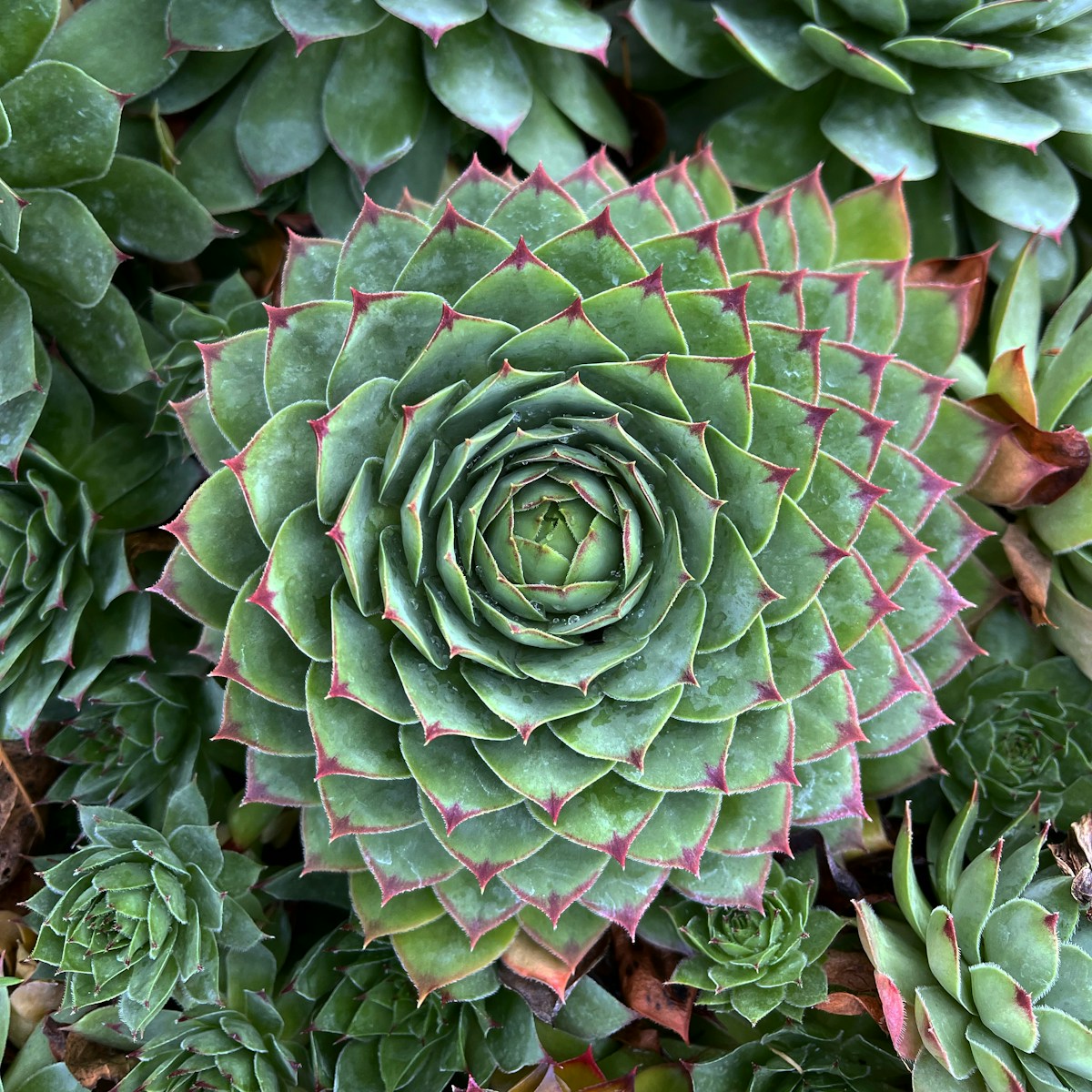
Sempervivum looks like living jewelry. Tight rosettes sit on rock walls, in old clay pots, or tucked into cracks in concrete. Colors shift from lime green to copper, wine red, or smoky purple. Baby rosettes appear around the edges like a little family circling a parent.
These plants have a simple common name that many of us grew up with. We call them hens and chicks. And once we understand how they live, it becomes very easy to help them thrive.
Meeting The “Live Forever” Succulent
Sempervivum is a group of rosette succulents in the stonecrop family, Crassulaceae. Most species grow in the mountains of southern and central Europe, where summers stay sunny and winters grow cold and dry.
The name tells a story.
- Sempervivum comes from Latin and means “always living” or “live forever”. These plants spread by offsets so a clump can keep going for many years.
- One famous species is Sempervivum tectorum, the common houseleek. The word tectorum means “of roofs” and points to an old tradition of planting these on rooftops in Europe.
In the garden, Sempervivum forms low mats of evergreen rosettes. Each rosette is a tight spiral of fleshy leaves that stores water. Many kinds stay only a few inches tall but can spread over a wide area as they send out more “chicks”.
Why People Call Them Hens And Chicks
If we look at one clump of Sempervivum from above, the name explains itself.
The center rosette acts like a hen. Around it, smaller rosettes appear on short runners. These are the chicks. Over time, each chick grows large, then makes its own chicks. The cluster expands in a slow, steady ring.
This growth habit makes Sempervivum perfect for people who enjoy sharing plants. A single hen from a friend can turn into a tray of rosettes that we can pass along to neighbors a few seasons later.
Color, Shape, And Seasonal Changes
Sempervivum rosettes stay small, but they pack a lot of detail into that tight spiral. Leaf tips can be pointed or softly rounded. Some types carry fine hairs on the edges or on the whole leaf. Others stay smooth and glossy.
Colors shift with the seasons.
- In cool weather and full sun, many varieties show strong reds, oranges, or deep purples.
- In shade or summer heat, the same plants may pull back toward green.
- Some kinds have lime centers with wine red outer leaves. Others glow bronze or rosy pink.
New offsets often start in soft green tones and pick up stronger color as they mature. This means one pot can hold many shades at once as hens age and chicks grow up beside them.
In summer, mature rosettes send up thick flowering stalks. Starry blooms in pink, red, or white open near the top. A blooming rosette has reached the end of its life and will die back after flowering. The patch stays full because many chicks remain at its base, ready to take over.
Tougher Than Many Succulents
One of the biggest strengths of Sempervivum is cold hardiness.
These plants evolved in mountain areas with snowy winters and strong summer sun. As a group, they can handle conditions that would kill many tender succulents.
- Many types grow well in USDA Zones 4 through 9.
- They shrug off frost and even extended freezes as long as the soil drains well.
- Freezing nights and bright days can deepen leaf color and bring out dramatic tones.
This makes hens and chicks great for outdoor pots, rock gardens, and even small crevices in retaining walls in many parts of the United States. In very hot and humid climates, they may prefer a bit of protection from intense afternoon sun, but they still like things bright and breezy.
Compared to Echeveria, which prefers milder zones and often needs winter protection, Sempervivum leans hard into the hardy side of the succulent world.
Light And Air: What These Rosettes Enjoy
Sempervivum loves light. In most regions, full sun through most of the day gives the best shape and color. Bright light keeps rosettes tight and compact and helps them keep good color through the season.
Air flow also matters. These plants live close to the ground, so stale, damp air around the leaves can encourage rot. When we plant them, we help them most by choosing spots that stay open and dry, not tucked under dense shrubs.
On very hot patios in low desert or Gulf coast conditions, they may enjoy light afternoon shade and a bit more breeze. In cooler or drier parts of the country, they usually handle full sun all day.
Soil And Water: Dry Feet Win
Sempervivum likes sharp drainage more than rich soil. In the wild, roots explore gravel, rocky ledges, and thin soils that never stay soggy.
For garden beds and pots, this means:
- Sandy or gravelly soil that sheds water fast
- Raised beds or slopes rather than low, wet spots
- Containers with generous drainage holes
Gardeners often mix in coarse sand, fine gravel, or pumice to open heavy soil. Well-drained ground prevents root rot, especially in winter when cold and wet soil together create trouble.
Watering can stay simple.
- Established hens and chicks appreciate a deep soak and then a long dry stretch.
- In most outdoor beds with average rainfall, they need little extra water once settled.
- In containers under eaves or on covered porches, they may need a drink every week or two during hot dry spells.
Overwatering shows up as mushy leaves and rosettes that collapse from the center. Underwatering is less common but leads to shriveled leaves that perk up again after a good soak.
Pots, Troughs, And Crevice Gardens
Sempervivum works in many different planting styles. The compact roots and clumping habit give us a lot of freedom.
Popular setups include:
- Shallow clay bowls filled with gritty mix and top-dressed with pea gravel
- Stone or hypertufa troughs that mimic alpine rock gardens
- Old bricks, concrete blocks, or broken pots used as little planters
- Crevice gardens where rosettes tuck between upright rocks
The key is to keep the root zone thin and free draining. Once we set that up, we can treat hens and chicks almost like a living mosaic and arrange colors and shapes any way we like.
Propagation That Feels Effortless
These succulents live up to the name “live forever” through constant offset production. Propagation mostly means gentle rearranging.
A simple way to spread them:
- Watch for chicks forming around the base of a hen.
- Wait until each chick has a small rosette and at least a hint of its own roots.
- Lift the soil a bit and locate the thin stem, called a stolon, that connects chick to hen.
- When that stolon turns dry and brittle, snap or cut it.
- Move the chick to a new pocket of soil or a new pot and press it in firmly.
Chicks settle quickly, especially in cool seasons. Within a year, many become hens with their own circle of offsets.
This cycle means a single original plant can gradually cover a whole planter or rock wall if we give it time and resist the urge to fuss too much.
Flowers And The One-Way Journey Of A Hen
Sempervivum belongs to a group of plants called monocarpic perennials. Each rosette blooms only once, then dies. The colony survives because many young rosettes are already in place.
The flowering show is worth a pause.
- A mature hen sends up a thick, sometimes fuzzy stalk from the center.
- The stalk carries clusters of star-shaped flowers in pink, red, or white.
- Pollinators visit readily, especially bees and small flying insects.
After seeds ripen, the flowering rosette dries out and collapses. We can trim away the spent stem and dry leaves. Chicks fill in the gap over the next season.
Folklore, Roofs, And Old Traditions
Sempervivum tectorum holds a deep place in European plant lore. For centuries, people planted houseleeks on cottage roofs and in cracks along stone walls.
Old beliefs said that the plant helped guard homes from lightning strikes and fire. That link to storms appears in many of its old names, such as Jupiter’s beard, Thor’s beard, and thunder-plant in various languages.
Rulers even encouraged the practice. Records from the time of Charlemagne list houseleek among the roof plants that people were urged to grow.
Herbalists also used the cooling sap on minor skin irritations in earlier centuries, though modern home growers mainly enjoy the plant for its look and toughness now.
Sempervivum And Pets
Many succulent fans also share space with cats and dogs. That mix calls for a little extra care.
Common vet and plant safety guides often list Sempervivum among the non-toxic succulents, and many growers keep hens and chicks in pet homes without trouble. Some succulent safety lists focus more on clearly toxic genera like Kalanchoe, Jade, Euphorbia, or Sansevieria and treat Sempervivum as a safer choice by comparison.
Even so, it helps to remember that any plant can cause mild stomach upset if a pet eats a large amount. Young animals sometimes chew plants out of boredom. Keeping valuable rosettes out of reach of heavy chewers protects both the plant and the pet.
If a particular animal tends to nibble, we can lean toward higher shelves, wall planters, or outdoor spots that sit away from favorite sleeping areas.
Simple Care Calendar For Hens And Chicks
Different climates call for small tweaks, but a basic year with Sempervivum looks calm and steady.
- Spring
New growth starts and colors brighten. This is a good time to divide crowded clumps, move chicks, and top-dress with fresh gravel or gritty soil. - Summer
Plants enjoy bright light and warm days. Some rosettes bloom. Deep but infrequent watering keeps containers happy during long dry spells, always letting soil dry between soakings. - Autumn
Cooler nights often bring the richest colors. Many gardeners enjoy this season most, since rosettes glow with reds and bronzes. Little care is needed beyond making sure drainage remains strong before winter rains or snow. - Winter
In cold regions, plants stay outdoors under snow or cold dry air. Good drainage is the key protection. In very wet climates, some people use cold frames or move pots under cover to keep crowns from staying soaked.
Fertilizer stays optional in every season. These plants evolved for lean conditions. A rich feed pushes soft growth that does not match their natural rhythm.
Rosettes For The Long Haul
Sempervivum gives us a generous mix of beauty and toughness. These small rosettes handle frost, poor soil, and tight spaces that many other plants refuse. They spread without becoming invasive and invite us to share offsets with friends, family, and neighbors.
With bright light, gritty soil, and a light hand on the watering can, hens and chicks settle in and stay put. Over the years a single plant can turn into a living quilt across stone, soil, or old pottery. That kind of steady presence adds a quiet sense of life to porches, paths, and garden corners, season after season.
Sempervivum looks like living jewelry. Tight rosettes sit on rock walls, in old clay pots, or tucked into cracks in concrete. Colors shift from lime green to copper, wine red, or smoky purple. Baby rosettes appear around the edges like a little family circling a parent. These plants have a simple common name that many…
Sempervivum looks like living jewelry. Tight rosettes sit on rock walls, in old clay pots, or tucked into cracks in concrete. Colors shift from lime green to copper, wine red, or smoky purple. Baby rosettes appear around the edges like a little family circling a parent. These plants have a simple common name that many…