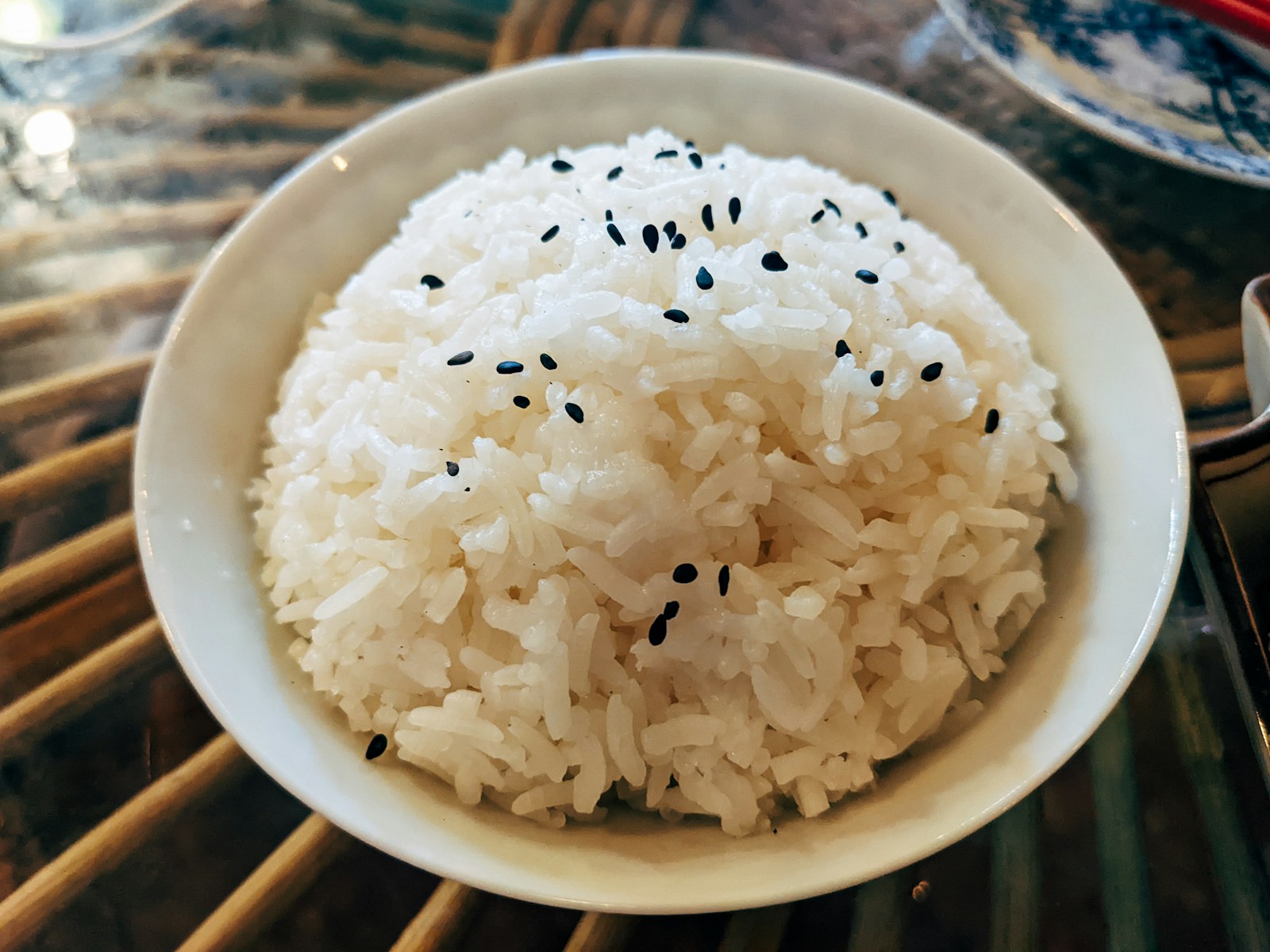
Xoi: Sticky Rice With Many Personalities
Xoi is Vietnam’s way of saying sticky rice, and it has more moods than a whole shelf of breakfast cereal. In one bowl it feels like comfort food. In another it looks like a festival. In a third it acts like a full meal with meat, pickles, and herbs.
Under all those toppings and colors, xoi is simple. It is glutinous rice, steamed until every grain turns shiny and chewy. In Vietnam it shows up on sidewalks, in markets, at weddings, and on family altars. It can be sweet or savory, plain white or bright purple, breakfast or dessert.
For those of us in the United States, xoi is a friendly way into Vietnamese food. The base ingredient is rice, something we already know. The twist is texture, toppings, and color. Once we get used to that, it starts to feel like the sticky rice cousin of mac and cheese, oatmeal, and birthday cake all at once.
Sticky Rice At The Center Of The Table
Xoi begins with a special kind of rice. Glutinous rice, sometimes called sweet rice, has more of a starch type called amylopectin. When we steam it, the grains cling to each other and form soft clumps. That sticky bite is a key part of the experience.
In Vietnam, xoi is not just a side dish. It is a main food group. People eat it for breakfast on the way to work. Kids grab it as an after-school snack. Families place it on altars during holidays and ancestor days. In many towns, xoi vendors set up in the early morning and sell out before lunch.
Sticky rice also carries meaning. The way the grains cling together feels like a symbol of family, unity, and staying close. In that sense, the texture tells a story that goes beyond simple carbs and calories.
In practical terms, xoi is fuel. Sticky rice is dense, filling, and easy to carry wrapped in banana leaves or paper. For a long time it helped farmers, students, Viola Purple and workers stay full through long days. Today it still plays that role, even if the setting is a city office or a college campus.
A Quick Tour Of Xoi Personalities
Xoi has two big families. One is savory. One is sweet. Inside each family, dozens of local styles live side by side.
Savory xoi
Savory xoi, often called xôi mặn, starts with a plain sticky rice base. On top, cooks pile meats, eggs, pickles, scallions, and sauces. A single serving can carry Chinese sausage, shredded chicken, cured pork, dried shrimp, pork floss, cucumber, pickled carrot and daikon, scallion oil, and chili paste.
The rice holds everything together like a soft, warm plate. Each bite mixes salty, sweet, chewy, and crunchy. It eats like a full meal in a paper tray or a banana-leaf packet.
A famous style in the north is xôi xéo. The rice is often tinted yellow with turmeric or mung bean. On top, the vendor adds mashed mung beans, shaved into thin ribbons, plus crispy fried shallots and a drizzle of chicken fat or oil. The layers look simple but taste deep and nutty.
Sweet xoi
Sweet xoi leans toward dessert or snack time. One gentle version is xôi đậu xanh or mung bean sticky rice, sometimes lightly sweetened and topped with sesame salt. Another is xôi bắp, a mix of sticky rice and sweet corn with coconut milk and sometimes mung beans.
Many sweet styles use coconut milk, sugar, and toasted sesame or peanut topping. A bright spread of colors often comes from natural plant dyes. Leaves, flowers, and fruits tint the rice yellow, green, purple, or red while it steams.
In the highlands and northwest regions of Vietnam, five-color sticky rice, xôi ngũ sắc, appears at festivals and important days. Each color carries its own meaning, tied to earth, water, fire, plants, and metal in local belief. The plate looks like a rice rainbow and feels like a celebration even before the first bite.
Red Sticky Rice For Luck And New Beginnings
One of the most striking xoi personalities is xôi gấc, the red sticky rice that glows like a bowl of tiny rubies. Cooks mix glutinous rice with the deep orange flesh of the gac fruit, then steam it and toss it with coconut milk. The result is tender grains in a rich red-orange hue.
Color carries heavy weight here. In Vietnamese culture, red stands for luck, joy, and good fortune. Because of that, xôi gấc appears at weddings, Lunar New Year feasts, and big life milestones. The sticky texture shows the wish for a bond that holds together. The bright color signals hope for prosperity, healthy children, and a smooth path ahead.
During Tet, trays of xôi gấc sit next to boiled chicken, pickled onions, and other holiday dishes. In wedding banquets, it shares space with soups, meats, and desserts. Guests enjoy the flavor, but they also read the dish as a message of care and respect from the host family.
For a U.S. cook, xôi gấc offers a vivid way to bring Vietnamese tradition to the table at New Year parties, engagement dinners, or even baby showers. The ingredients may require a visit to an Asian market, but the method is still simple steaming and stirring.
Xoi In Everyday Vietnamese Life
While special versions take the spotlight at festivals Viola Purple Picotee, the most common xoi moments are small and daily. Street vendors in Hanoi, Saigon, and many other cities steam huge mounds of sticky rice at dawn. They color some batches with turmeric, pandan, magenta plant leaves, or black beans. Others stay plain white or mix with corn, peanuts, or cassava.
Customers line up for breakfast packets before school and work. A basic order might be one scoop of rice, a sprinkle of mung bean, and a handful of fried shallots. A fuller one looks more like a loaded baked potato, with meats and pickles on top.
Xoi has also moved into modern cafes and bakeries. In Vietnam’s big cities, coffee shops serve sticky rice bowls next to cold brew and egg coffee. Dessert shops fold xoi into parfaits and creative plates. Hotel buffets set out colorful sticky rice alongside pastries, pho, and fresh fruit.
Through all these settings, the dish stays grounded. It is still about rice, steam, and a few toppings. The same bowl can feel like humble street food or a stylish brunch, depending on how it is dressed.
Finding Xoi In The United States
In many American cities, xoi is already here. We may have walked past it without knowing the name.
Vietnamese bakeries and delis often sell sticky rice in small plastic boxes or banana-leaf wraps. Some places stack sweet xoi with coconut and sesame in the dessert case. Others tuck savory xôi mặn onto the menu near banh mi and noodle bowls. In Little Saigon areas and larger Vietnamese communities, dedicated xoi shops sometimes offer long lists of flavors and toppings.
Online delivery platforms and Asian grocery apps also carry ready-to-eat xoi and frozen versions. A quick search for “xoi” around major metros like New York or Los Angeles pulls up multiple spots, from small bakeries to modern Vietnamese cafes.
For home cooks, sticky rice and many of the key toppings are easy to source. Glutinous rice sits in the grain aisle of Asian supermarkets and in the international section of some mainstream chains. Coconut milk, dried shrimp, Chinese sausage, mung beans, and sesame seeds are common pantry items in those same stores.
Once the ingredients are in the kitchen, the rest is technique and patience rather than high skill. That makes xoi a nice project for families, cooking clubs, and food curious kids who want to explore another culture through a single base ingredient.
Making Simple Xoi At Home In A U.S. Kitchen
Traditional xoi relies on soaking and steaming. The classic method calls for washing glutinous rice until the water runs clearer, then soaking it for several hours before steaming it over boiling water in a lined basket. The steam cooks the grains evenly while keeping them separate and fluffy.
Modern shortcuts exist, and they fit busy American routines. Rice cookers handle sticky rice with minimal fuss. A common pattern is equal parts sweet rice and water with a pinch of salt and a tiny amount of oil, cooked on the regular cycle.
Some home cooks even use the microwave. They soak the rice briefly, then cook it in a covered dish in short bursts, stirring in between, until the grains turn translucent and sticky. This method appears in popular Vietnamese-Australian and Vietnamese-American blogs as a weekday hack.
Once we have a pot or bowl of plain xoi, personalities come from add-ins. A drizzle of coconut milk and sugar turns it into dessert. A spoon of scallion oil and soy sauce moves it toward savory. Corn, mung beans, shredded chicken, or peanuts can be folded in or piled on top.
Glutinous rice is naturally gluten-free, despite the name. The “glutinous” part refers to the sticky texture, not wheat gluten. That makes xoi a strong option for guests who avoid gluten, as long as toppings and sauces stay safe.
Three Easy Xoi Personalities To Try
A full tour of xoi would fill a small book, but a few simple styles give us a strong start at home.
Cozy morning xoi
For a gentle breakfast, we can aim for a version similar to xôi bắp or xôi đậu xanh. Cook glutinous rice in a rice cooker. While it steams, simmer corn kernels or split mung beans until soft. Toss the finished rice with the corn or beans, a pinch of salt, and a little sugar. Young Starter Transplant Vegetable Plugs. Top with toasted sesame seeds and a light drizzle of coconut milk.
The bowl eats like a cross between oatmeal and rice pudding, but it holds together in chewy clumps instead of turning loose and soupy.
Street-style savory xoi
To echo xôi mặn, cook a pot of sticky rice and keep it warm. In a skillet, crisp sliced Chinese sausage. In another pan, soften chopped scallions in oil to make scallion oil. Arrange the rice in bowls, then add sausage, a sprinkle of pork floss or shredded roasted chicken, quick pickled carrot and daikon, scallion oil, and a touch of chili paste or sriracha.
The result feels like a loaded baked potato moved to Southeast Asia, with the rice acting as the starch base.
Festive dessert xoi
For a party, we can play with color. Divide a batch of cooked sticky rice into a few bowls. Tint each with a small amount of natural food color from pandan extract, butterfly pea flower, or beet juice, along with coconut milk and sugar. Arrange the colored mounds on a platter, top with shredded coconut and crushed peanuts, and let guests scoop their own portions.
Even without exact traditional dyes, the plate gives the same mood as five-color sticky rice or xoi dessert trays in Vietnam.
How Xoi Fits Into An American Food Life
From a nutrition standpoint, xoi is a compact source of carbohydrates, with some protein and fiber when beans, corn, or peanuts join the mix. Coconut milk and fatty toppings add richness and calories, so portions matter if we track energy intake. Still, compared with many processed snacks, a small bowl of xoi with beans and nuts feels grounded and satisfying.
Culturally, xoi opens a door to Vietnamese stories and values. Red sticky rice on New Year’s Eve hints at hopes for luck and unity. Five-color sticky rice points to ties with nature and local belief. Everyday breakfast xoi from a street stall reflects hard work, community, and the simple joy of a warm, filling meal at dawn.
For families and classrooms in the U.S., cooking xoi together can turn into a small lesson in geography, history, and respect. Kids see how one grain, treated in many ways, can support a whole food culture. Adults enjoy new textures and flavors while still standing on the familiar ground of rice.
Xoi also fits into current American interests in plant-forward eating and global comfort food. Many versions are naturally meatless or easy to adapt. Sticky rice bowls sit well next to grain bowls, ramen, and mac and cheese on modern menus. Chefs and home cooks can experiment with cross-overs, like xoi with barbecue, roasted vegetables, or Southern-style greens, without losing the original spirit.
One Grain, Many Stories
Xoi shows how far a single ingredient can travel. From terraced rice fields and morning markets in Vietnam, sticky rice now appears in bakeries, cafes, and home kitchens across the United States. It keeps its chewy soul but switches outfits with every topping and color.
When we cook or order xoi, we take part in that journey. We scoop up rice that stands for family ties, new beginnings, daily effort, and shared joy. We taste coconut, mung beans, sausage, or sesame, but underneath it all we meet the same sticky grains, holding on to each other.
Those grains remind us that food is not just fuel. It is also memory, meaning, and a quiet bridge between places, carried in a warm handful of rice.
Xoi is Vietnam’s way of saying sticky rice, and it has more moods than a whole shelf of breakfast cereal. In one bowl it feels like comfort food. In another it looks like a festival. In a third it acts like a full meal with meat, pickles, and herbs. Under all those toppings and colors,…
Xoi is Vietnam’s way of saying sticky rice, and it has more moods than a whole shelf of breakfast cereal. In one bowl it feels like comfort food. In another it looks like a festival. In a third it acts like a full meal with meat, pickles, and herbs. Under all those toppings and colors,…