Zhug: The Bright, Spicy Green Sauce More Home Cooks Should Know
Some sauces sit quietly on the side. Zhug does not. It is bright. It is green. It is sharp with herbs, warm with spice, and hot enough to wake up a whole plate of food. Once you try it, you start to see the point right away. This is not a sauce that hides in the background. It changes dinner fast.
Zhug comes from Yemen, and you will also see it spelled zhoug, schug, or skhug. Food writers and recipe writers often describe it as a Yemenite hot sauce, and several note that it later became a staple in Israeli cooking as well, especially through Yemenite Jewish food traditions. In other words, it has deep roots, even if many of us are only now noticing it in home kitchens and grocery stores in the United States. What Is Za’atar? A Friendly Guide to the Spice Blend and How to Use It.
That late discovery is part of what makes zhug so fun. It can feel new to us, but it is not new at all. It has been used for years with falafel, shawarma, breads, stews, eggs, and many other foods. Some writers point out that ready-made versions even made their way into U.S. grocery aisles, including Trader Joe’s, which helps explain why more home cooks are starting to spot it and wonder what to do with it.
What makes zhug stand out is the way it carries both freshness and heat at the same time. Many hot sauces lean hard on vinegar, smoke, or fermented depth. Zhug usually goes another way. It is built from fresh green chiles, garlic, herbs, oil, and warm spices. That gives it a lively taste that feels vivid instead of heavy. You get the fire, yes, but you also get lift.
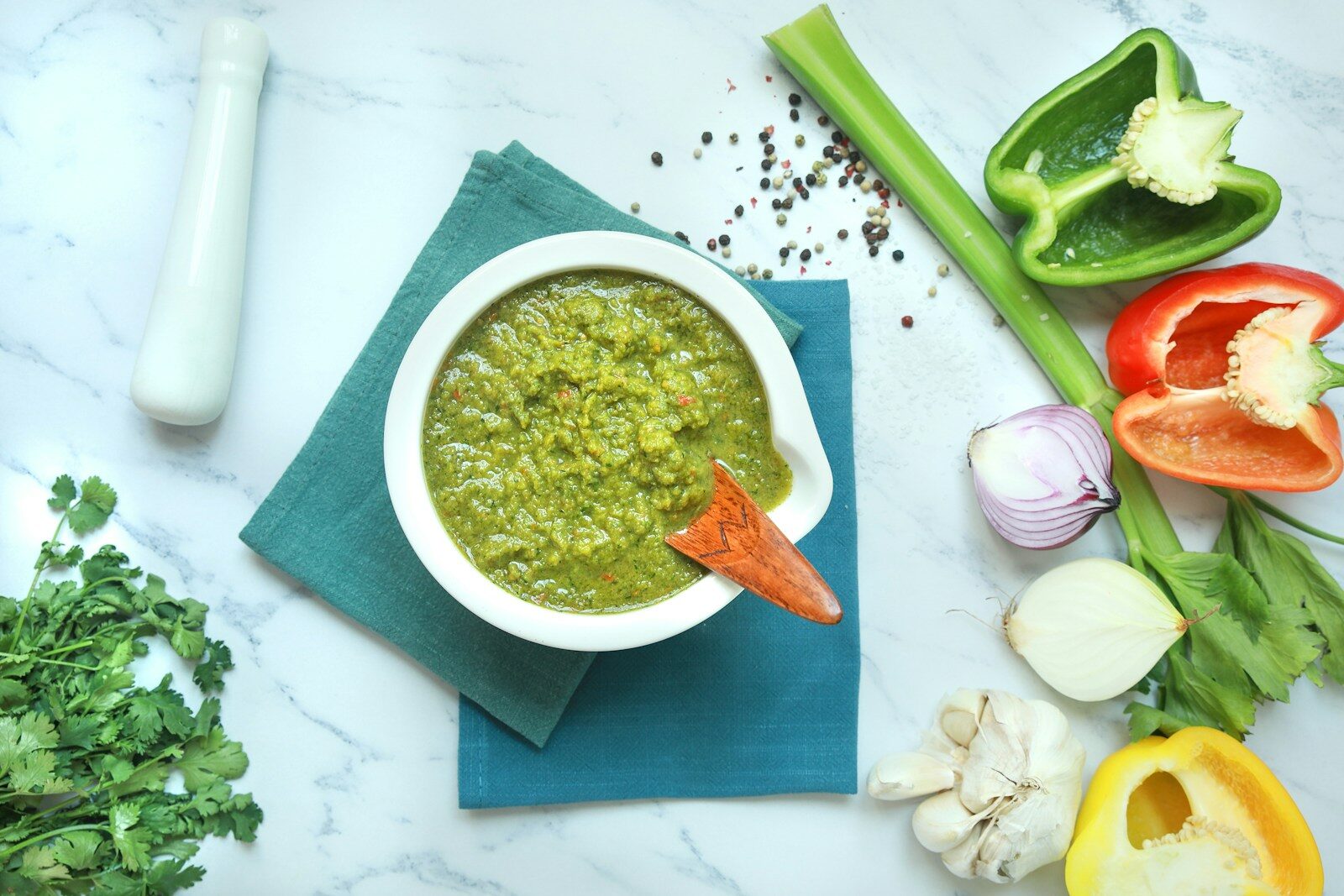
Most versions center on cilantro and parsley, plus garlic and chiles. Common spices include coriander, cumin, cardamom, and black pepper. Lemon juice shows up often too. Bon Appétit’s version uses serranos, parsley, cilantro, olive oil, lemon juice, and toasted spices. Serious Eats describes zhug as a Yemenite hot sauce with coriander seeds and leaves, cardamom, cumin, parsley, and plenty of chile heat. The Nosher’s version keeps that same big idea while showing how flexible the sauce can be from kitchen to kitchen.
That range matters. Zhug is not one rigid formula. Some cooks make it rough and chunky. Some make it smoother. Some lean hard on cilantro. Some bring in more parsley. Some use very hot fresh chiles. Others pull back a little. The Atlantic notes both green and red versions, and says the sauce is usually very hot. That means home cooks do not need to panic about doing it the “one right way.” The real goal is balance: herbs, spice, heat, and enough oil to carry it all.
This is also why zhug is such a smart sauce for ordinary weeknight cooking. It tastes like effort, but it behaves like a shortcut. A spoonful on plain rice changes the whole bowl. A dab on grilled chicken makes the meal feel brighter. Mixed into yogurt, it becomes a quick sauce for vegetables, wraps, or roasted potatoes. Stirred into hummus, it adds heat and a fresh herbal note at the same time. You do not need a special menu for it. You need a spoon and something warm to put it on.
That may be the best reason more home cooks should know it. Zhug is not fussy. It is bold, but it is useful. We all know the feeling of opening the fridge and seeing leftovers that need help. Rice. Beans. Roasted vegetables. Chicken breast. A sandwich that looks a little dry. Eggs that need something more than salt and pepper. Zhug is built for that moment. Instead of starting over, you add one sharp green spoonful and keep going.
It also fits the way many of us cook now. We mix and match. We build bowls. We snack from the fridge. We make one protein, one vegetable, one starch, and hope a sauce ties it all together. Zhug does that job very well. Serious Eats even compares it to other herb-heavy sauces like chimichurri, chermoula, salsa verde, and pesto. That comparison helps, because if you already know how those sauces brighten food, you already understand half of zhug’s appeal. How Long Is Fishing Line Good For? A Clear Guide You Can Trust. But most of all, zhug brings more heat and a different spice profile, especially from cardamom and cumin.
If you have never tasted it, the easiest way to picture zhug is this: imagine a green herb sauce that is fresher than many bottled hot sauces, hotter than most pesto, and more direct than a creamy dip. It is not mellow. It is not sweet. It is clean, spicy, and aromatic. That is why it works so well with rich foods. Fatty meats, eggs, hummus, yogurt, and olive oil-based dishes all welcome that contrast. The sauce cuts through heaviness without feeling thin.
Zhug is especially good for cooks who say they are bored with the same condiments. Ketchup, ranch, and basic hot sauce have their place. So do mayo and mustard. But zhug brings a different kind of energy. It wakes up food without covering it up. You still taste the chicken, the potato, the egg, or the beans. You just taste them with more spark. That is a big reason food writers keep mentioning it with sandwiches, grilled meats, vegetables, breads, and breakfast dishes.
Another nice thing is that zhug gives home cooks room to scale the heat. Bon Appétit says to use whatever fresh chile you can find, while also reminding readers that zhug is supposed to pack some heat. That is helpful advice. You do not need the exact pepper from one recipe. You do need to respect the sauce’s personality. It should feel alive. If it is completely gentle, it may still taste good, but it starts to become another green sauce instead of zhug.
The method is simple too. Some recipes use a mortar and pestle, and Serious Eats argues that pounding herbs and aromatics this way pulls out more flavor and builds a better emulsion with the oil. Other versions use a food processor for speed. So there is a quality choice and a practical choice. At home, both can work. After more than a few rushed dinners, most of us know that the best sauce is often the one we will actually make.
You also do not have to make it from scratch every time. Store-bought versions exist, and Trader Joe’s sells a refrigerated Zhoug Sauce made with cilantro, jalapeño peppers, chile flakes, garlic, cardamom, sea salt, and cumin seeds. How to Control Mosquitoes Outdoors. The San Francisco Chronicle also noted that packaged zhoug had started appearing in U.S. grocery aisles. So if your first jar comes from a store, that still counts. In fact, that may be the easiest way to figure out whether you want it in your regular rotation before you start blending your own.
Once you have it, the uses pile up fast. Put it on scrambled eggs. Swirl it into hummus. Stir it into yogurt for a dip. Spoon it over grilled vegetables. Smear it inside a sandwich. Add a little to soup or beans. Toss roasted potatoes with a bit just before serving. The Atlantic suggests using it with falafel, fried vegetables, soups, pasta, bean dishes, and yogurt. The Nosher says meat, fish, sandwiches, stews, and more. That “and more” is doing a lot of work, because it is true. Zhug likes range.
There is also something cheerful about it. Many green sauces taste fresh, but zhug tastes alert. It feels like a sauce that wants food to be less sleepy. That sounds small, yet it matters. Home cooking can get repetitive even when it is good. We cycle through the same proteins, the same pans, the same pantry basics. A spoonful of zhug can make those repeats feel less repeated. Not because it is trendy, but because it is vivid.
So yes, more home cooks should know zhug. Not because every kitchen needs another sauce in the fridge, but because this one earns its space. It brings heat, herbs, spice, and brightness in one move. It has real history behind it. It is flexible. It can be homemade or bought ready to use. And once it is around, it tends to find its way onto everything from breakfast to leftovers to late-night sandwiches. That is usually the sign of a sauce worth keeping.
Some sauces sit quietly on the side. Zhug does not. It is bright. It is green. It is sharp with herbs, warm with spice, and hot enough to wake up a whole plate of food. Once you try it, you start to see the point right away. This is not a sauce that hides in…
Some sauces sit quietly on the side. Zhug does not. It is bright. It is green. It is sharp with herbs, warm with spice, and hot enough to wake up a whole plate of food. Once you try it, you start to see the point right away. This is not a sauce that hides in…