Nigerian Food: Popular Dishes, Regional Flavors, and What to Try
Nigerian food is hard to sum up with one plate. The country is large, culturally diverse, and home to many food traditions. What people eat can change by region, family, season, religion, and even the city they live in.
Still, some foods show up again and again. Rice, cassava, yams, beans, millet, sorghum, maize, plantains, peppers, leafy greens, fish, meat, and palm oil all play important roles.
Then there are the dishes that have become known across the country. Jollof rice may be the most famous. Egusi soup is another favorite. Suya is one of Nigeria’s best-known street foods.
Together, they give us a good place to start.
Nigerian Food Changes From Region to Region
Nigeria stretches from the drier Sahel and savanna areas of the north to wetter forests and coastal areas in the south. That affects what grows well and, in turn, what ends up on the table.
According to the Food and Agriculture Organization, major Nigerian staple crops include maize, cassava, sorghum, cowpeas, rice, yams, and millet.
But we shouldn’t divide Nigerian food into neat boxes.
People move. Recipes travel. Families adapt dishes to what they can buy. A food that started in one part of Nigeria may now be cooked and enjoyed across the country.
That is one of the most interesting things about Nigerian cuisine.
Food in Northern Nigeria
Grains have a strong place in northern Nigerian cooking. Millet, sorghum, maize, and rice are commonly used.
They may be cooked into soft or firm foods that are served with soup. One example is tuwo, a thick, smooth dish somewhat like a very firm porridge.
Tuwo can be made from different grains.
Tuwo shinkafa is made with rice, while tuwo masara is made with maize. These are usually eaten with soups rather than by themselves.
Northern Nigeria also has many drinks and porridges made from grains and groundnuts. Kunun gyada, for example, is made using groundnuts and rice.
What Food Delivers Near Me? And then there is suya.
Though you can now find it far beyond the north, suya is strongly tied to Hausa food culture and is believed to have originated in northern Nigeria.
Food in Southern Nigeria
Cassava, yams, plantains, and other root crops are especially important in many southern Nigerian food traditions.
These ingredients may be boiled, fried, pounded, or processed into what Nigerians often call swallows.
A swallow is a soft, starchy food that is eaten with soup or stew. You usually pinch off a small piece, shape it with your fingers, and use it to scoop up the soup.
Common examples include:
- Eba, made from processed cassava called garri
- Pounded yam
- Amala
- Lafun, made from cassava flour
- Other regional yam, cassava, and plantain preparations
The swallow itself is usually mild. Much of the flavor comes from the soup served with it.
That combination is central to many Nigerian meals.
Yoruba Food in Western Nigeria
Yoruba food traditions are associated with southwestern Nigeria, though many Yoruba dishes are now enjoyed far outside that region.
Yams and cassava are important, as are beans, rice, peppers, leafy vegetables, and rich soups and stews.
Amala is a well-known Yoruba staple. It is often eaten with soups and sauces rather than alone.
Leafy vegetable dishes also play a big part in Yoruba cooking. Efo riro, for example, is a rich vegetable stew that may include peppers, meat, fish, or other ingredients.
Rice is common too.
Jollof rice is served at homes, restaurants, celebrations, and large parties across Nigeria. It shouldn’t be thought of as exclusively Yoruba food, even though it is a familiar sight at Yoruba celebrations in places such as Lagos.
Igbo Food in Eastern Nigeria
Eastern Nigerian food also makes heavy use of yams, cassava, vegetables, seeds, fish, meat, and palm oil.
Soups are especially important.
They can be thickened with seeds, vegetables, or other ingredients and then eaten with pounded yam, eba, or another swallow.
Egusi soup is widely eaten in Igbo communities, but it isn’t only an Igbo dish. Versions of egusi are made by many ethnic groups across Nigeria.
Can You Sue for Food Poisoning? That is a pattern we see often.
A dish may have deep roots in one community while also having versions throughout the country.
Jollof Rice Is One of Nigeria’s Most Famous Foods
If you have heard of only one Nigerian dish, there is a good chance it is jollof rice.
Jollof is a West African rice dish, and several countries have their own versions. Nigerian jollof has become especially well known.
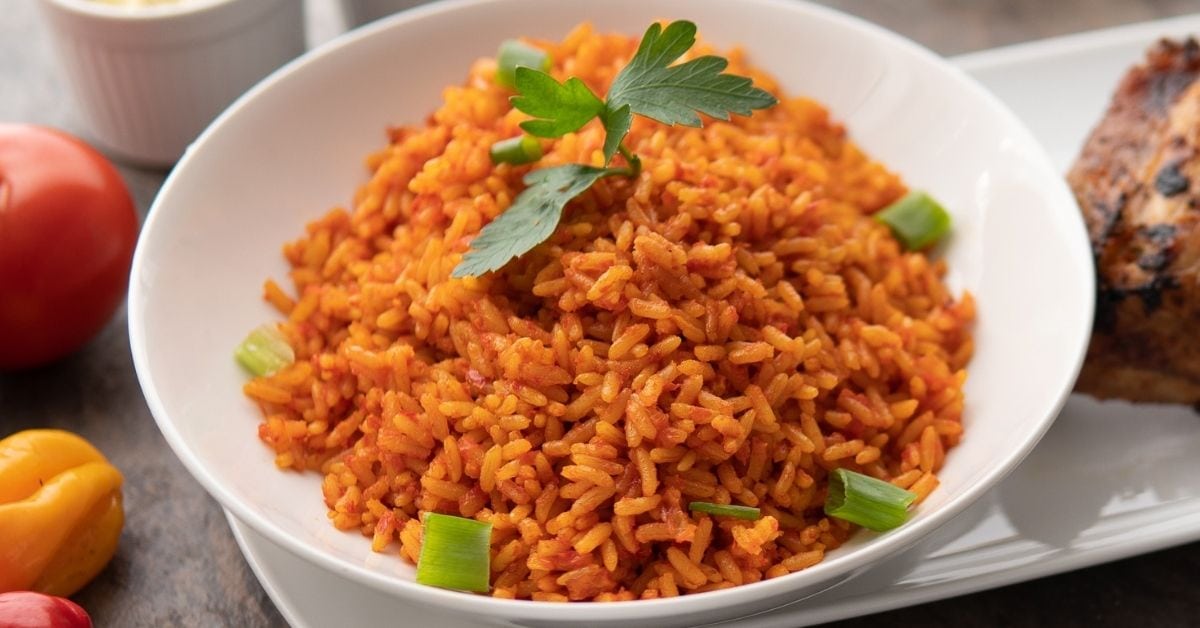
The basic Nigerian style usually starts with long-grain rice and a seasoned tomato-and-pepper base. Onions, tomato paste, cooking oil, stock, and spices may also be used.
Everything cooks together so the rice absorbs the sauce.
The result is rich, savory, slightly sweet, peppery, and deeply flavored.
Recipes differ from one cook to the next.
Some people serve jollof with fried or grilled chicken. Beef is another common choice. Fried plantains, salad, moin moin, and other sides may also share the plate.
What Is Party Jollof?
There is regular jollof.
Then there is party jollof.
Nigerian party jollof is closely linked with weddings, celebrations, and other large gatherings. Traditionally, large pots may be cooked over wood or charcoal.
That can give the rice a smoky taste that many people love.
In Lagos, jollof is a familiar sight at large social events. It has become more than something to eat. It is part of the party itself.
Egusi Soup Gets Its Rich Flavor From Seeds
Egusi soup is another Nigerian classic.
Its main ingredient is egusi, the edible seeds of certain melon, squash, or gourd plants. The dried seeds are ground before being added to the soup.
They help make the dish thick, rich, and nutty.
Depending on the cook and region, egusi soup may also contain leafy vegetables, peppers, palm oil, crayfish, smoked fish, stockfish, meat, or other ingredients.
There is no single version.
Some egusi soups are thick. Others are softer and creamier. The greens and seasonings can also change from place to place.
That flexibility is part of the dish.
Egusi soup is commonly served with a swallow such as eba, pounded yam, or amala.
Instead of thinking of the soup as an appetizer, it helps to picture the soup and swallow as the meal.
Suya Is Nigeria’s Famous Grilled Street Food
Calling suya simply Nigeria’s national dish misses part of the story.
It is better known as one of the country’s most popular street foods.
Suya is believed to have Hausa roots in northern Nigeria, but today it is eaten throughout the country. It is especially easy to find in cities such as Lagos.
Traditional suya begins with thin pieces of meat.
Beef is classic, but sellers may also prepare chicken, ram, liver, kidney, gizzard, tripe, and other versions.
The meat is placed on wooden skewers and coated with a dry spice mixture before it is grilled over hot coals.
The spice mixture is a big part of what makes suya taste like suya.
It commonly includes ground peanuts or groundnut products along with ingredients such as ginger, garlic, pepper, salt, Arugula and other spices. Recipes vary from one seller to another.
After grilling, the meat may get another dusting of spice.
Sliced onions are a common accompaniment.
The result is smoky, spicy, nutty, and savory.
One practical point matters if you are trying suya for the first time: traditional suya seasoning commonly contains peanuts. Anyone with a peanut allergy should check the ingredients before eating it.
More Nigerian Foods Worth Knowing
Jollof, egusi, and suya get a lot of attention, but Nigerian food goes much further.
Akara are fried bean fritters. They are eaten as street food and at home and can even be part of breakfast.
Moin moin is another bean dish. Instead of being fried, the seasoned bean mixture is steamed until firm.
Dodo is fried ripe plantain. The natural sugar in the plantain caramelizes as it cooks, giving it a sweet edge that works well next to spicy or savory dishes.
Pepper soup is a light but intensely seasoned broth that can be made with different meats or fish.
There are also countless soups, stews, rice dishes, bean dishes, snacks, grilled foods, porridges, and drinks.
Nigeria is simply too large to reduce its cuisine to a short list.
Is Nigerian Food Always Spicy?
Nigerian cooking can be hot, but it doesn’t have to be.
Peppers are used in many dishes, and some cooks like serious heat. Others use much less.
Spiciness also isn’t the only thing going on.
A Nigerian meal may be smoky, nutty, earthy, sweet, salty, or deeply savory. Dried seafood, crayfish, fermented seasonings, palm oil, peppers, onions, spices, seeds, vegetables, Basil Lemon and stock can build layer after layer of flavor.
So if you don’t like very hot food, Nigerian cuisine isn’t automatically off the table.
Ask about the pepper level when ordering.
How Nigerian Meals Are Usually Served
Nigerian meals don’t always follow the appetizer-main course-dessert pattern familiar in many Western restaurants.
Often, the main dish is the whole event.
Rice may come with meat, plantain, beans, or vegetables. Soup may be served alongside a swallow. Street foods such as suya can be eaten alone or shared.
At celebrations, things can get much bigger.
Small snacks may appear first, followed by plates of jollof rice, fried rice, meat, plantain, moin moin, and other foods.
Food is also closely tied to social life.
Weddings, birthdays, religious celebrations, festivals, and family gatherings can all come with their own food traditions.
A Good First Plate of Nigerian Food
If Nigerian food is new to you, you don’t need to understand every regional dish before trying it.
Start with something approachable.
Jollof rice with chicken and fried plantain gives you sweet, smoky, savory, and peppery flavors on one plate.
Try egusi with pounded yam or eba when you want to understand the classic soup-and-swallow style of eating.
And if you come across a good suya stand, grilled beef with onions and suya spice offers a completely different side of Nigerian food.
Those three dishes aren’t the whole story.
Not even close.
But they show why Nigerian cuisine is so hard to describe with one ingredient or one so-called national dish. It is a collection of regional traditions that keep mixing, traveling, and changing while still holding on to their roots.
Nigerian food is hard to sum up with one plate. The country is large, culturally diverse, and home to many food traditions. What people eat can change by region, family, season, religion, and even the city they live in. Still, some foods show up again and again. Rice, cassava, yams, beans, millet, sorghum, maize, plantains,…
Nigerian food is hard to sum up with one plate. The country is large, culturally diverse, and home to many food traditions. What people eat can change by region, family, season, religion, and even the city they live in. Still, some foods show up again and again. Rice, cassava, yams, beans, millet, sorghum, maize, plantains,…