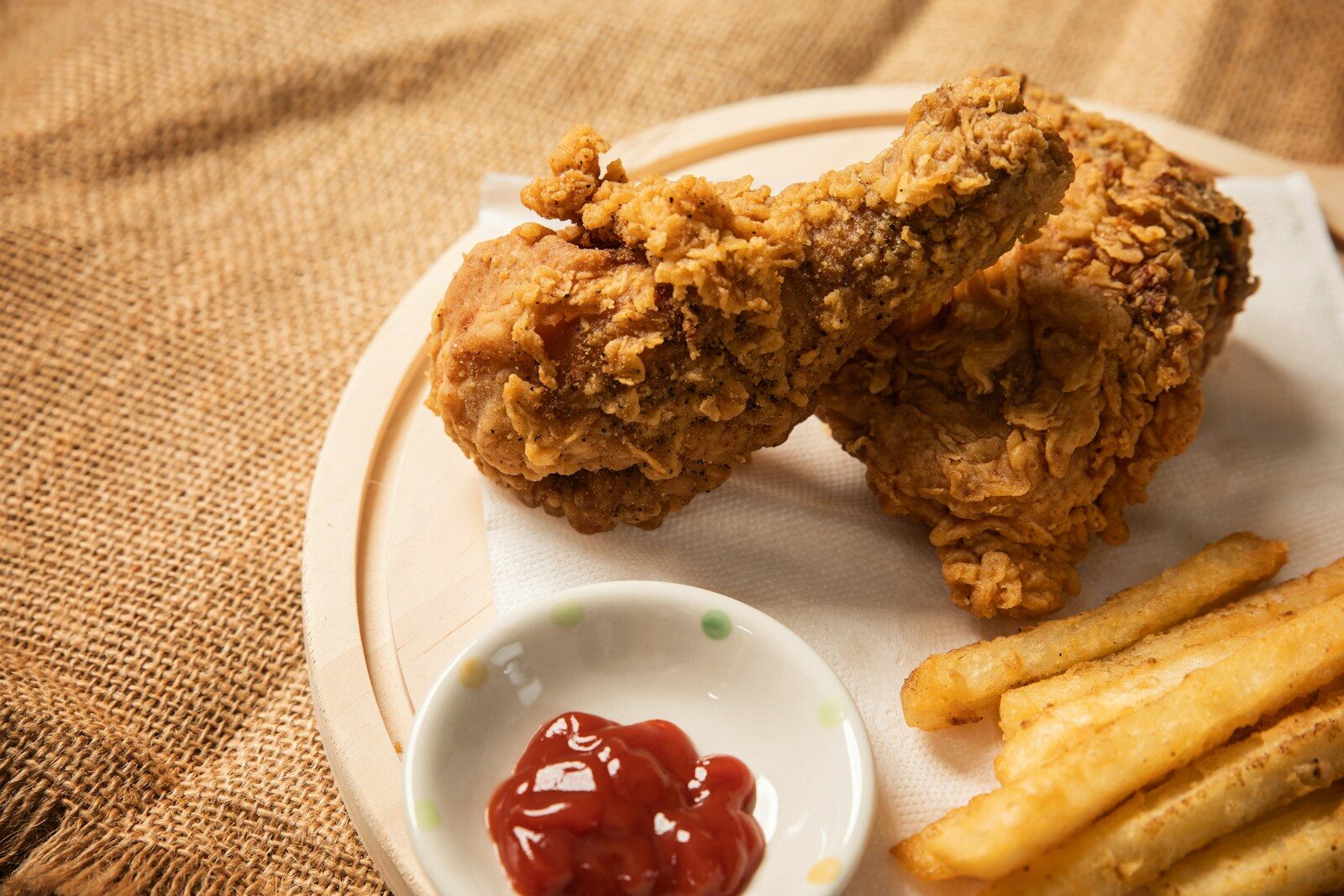
How to Keep Fried Food Crispy
Keep fried food crispy by letting steam escape. Drain it on a wire rack, not in a closed container. Hold it in a low oven in one loose layer, and wait to add wet sauce. For travel, use vented packaging and keep hot fried food away from cold or moist items.
Crisp crust turns soft when water moves into it. Steam from the hot center rises and gets trapped by foil, a lid, or a pile of food. Oil temperature also matters. Food fried too cool absorbs more oil and may turn heavy. Food packed while very hot keeps cooking in its own moisture.
Start With the Facts That Fit Your Case
Food answers change with the brand, recipe, serving size, and local rule. Read the current label or official page. Use a scale, measuring spoon, thermometer, or written cost sheet when a close number matters. A small measurement often beats a broad guess.
Safety and quality are not always the same. Food can look good and still be unsafe. It can also be safe but lose texture or flavor. Keep time, temperature, allergens, and clean handling in the plan. Then work on taste, price, or appearance.
Save the facts you use. Take a photo of a label, write the batch, or note the date of an online offer. Recipes, fees, and policies can change. A record gives you something clear to check when the next package or order looks different.
Fry at a steady temperature
Use the recipe’s oil range and a thermometer. Add small batches so the oil does not cool too far.
Let frozen surface ice fall away before frying, but follow safe handling steps. Crowding makes food steam and can cause uneven color. Bring the oil back to temperature between batches.
Use a rack instead of paper alone
Set fried food on a wire rack over a sheet pan. Air can move under the crust, and oil can drip away. Paper towels touch the bottom and may trap steam. They are fine for a quick blot, but move the food to a rack soon after.
Hold in a low oven
For several batches, use an oven near 200°F to 250°F when the recipe allows. Keep pieces in one layer with space.
Do not cover them. Thin foods may dry out if held too long, so serve as soon as you can. Check that meat and seafood reach a safe internal temperature.
Salt and sauce at the right time
Fine salt can be added while food is hot, but very wet seasoning may soften the crust. Put gravy, hot honey, buffalo sauce, or dressing on the side until serving. For coated wings, accept that sauce changes the texture and toss them at the last moment.
Pack for travel with vents
Use a box with small vents or leave a paper bag slightly open. Do not seal hot fried food in plastic.
Keep fries away from a steamy burger and pickles. Place cold dips in a separate bag for food safety. A short trip gives better results than a long sealed ride.
Reheat with dry heat
An oven, toaster oven, or air fryer can bring back crispness. Spread food in one layer and heat until hot. A microwave warms fast but creates steam and often softens breading. For food safety, chill leftovers promptly and reheat only the amount you plan to eat.
A Simple Way to Put This Into Practice
Use the steps below as a working list. Do one step at a time. Mark what is done. Pause when a rule, symptom, safety issue, or cost is not clear. That pause is useful. It gives you a chance to check before the choice becomes hard to undo.
- Use a thermometer for oil.
- Fry small batches.
- Drain on a rack.
- Hold uncovered in a low oven.
- Pack with vents and sauce apart.
Step 1: Use a thermometer for oil. Give this step a clear date or result. Keep any photo, label, receipt, or written answer that supports it. Then move to the next step only when you know what changed.
Step 2: Fry small batches. Give this step a clear date or result. Keep any photo, label, receipt, or written answer that supports it. Then move to the next step only when you know what changed.
Step 3: Drain on a rack. Give this step a clear date or result. Keep any photo, label, receipt, or written answer that supports it. Then move to the next step only when you know what changed.
Check What Happened Next
Check the result with the same measure each time. Use the same cup, scale, order basket, recipe size, or holding time. A fair test helps you know whether the change worked or whether another part of the process changed too.
Stop and ask a qualified source when food may be unsafe, an allergen is unclear, a permit is missing, or a label claim could mislead a buyer. Taste and convenience never need to outrun safety.
Read the source dates as well as the words. A rule, price, product, or local service can change. When the choice has money, safety, or a deadline attached, confirm it again just before you act.
Mistakes That Can Make the Problem Harder
Most mistakes come from moving too fast or using one rule for every case. The points below are easy to make. They are also easy to avoid when you slow down and check the source in front of you.
- Covering hot fried food with foil.
- Stacking pieces in a deep bowl.
- Frying a large batch in cool oil.
- Adding wet sauce long before serving.
When one of these happens, do not hide it or double down. Go back to the last clear fact. Correct the record, change the setup, or ask for help. A small fix now is often cheaper and safer than a large fix later.
Give the Steam Somewhere to Go
The crust stays crisp when heat and moisture can leave. A rack, open space, and quick service do more than extra breading. Once you see steam as the problem, the best fixes become simple.
Crisp fried food needs steady oil heat, a wire rack, open air, late sauce, and vented travel packaging.
Crisp fried food needs steady oil heat, a wire rack, open air, late sauce, and vented travel packaging.