Why Are Beaches Glowing at Night? A Simple Guide to Bioluminescent Beaches
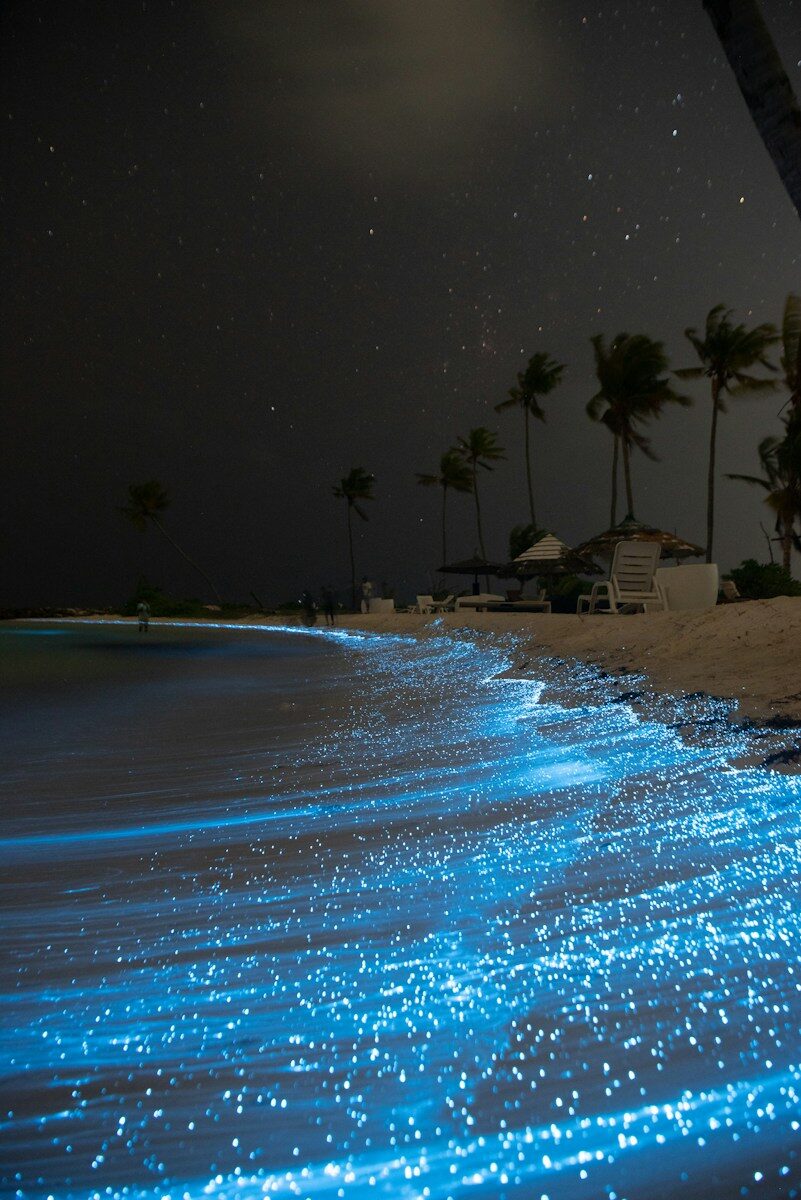
A beach can really glow at night. The light is usually made by tiny living organisms in the water. When waves, fish, hands, or a paddle disturb them, some species flash blue-green light. That natural light is called bioluminescence.
Interest in bioluminescent beaches is surging in 2026. Search-trend data published in September showed searches for “bioluminescent beaches near me” up sharply from a year earlier. The photos look unreal, but the science behind the glow is very real.
What makes ocean water glow?
Bioluminescence is light made by a living thing through a chemical reaction. NOAA explains that it is common in the ocean. Fish, squid, jelly-like animals, bacteria, and plankton can all include species that make their own light.
The beach glow most travelers hope to see often comes from microscopic plankton called dinoflagellates. You cannot see one cell from shore. But when huge numbers gather in the water and flash together, a breaking wave can light up like a blue line.
At Point Reyes National Seashore, the National Park Service explains that movement can trigger the light. A wave, kayak paddle, or canoe can stir the organisms and make the glow easier to see.
Why is the glow usually blue?
Blue light travels well through seawater. That helps explain why so much marine bioluminescence looks blue or blue-green to our eyes. NOAA notes that living light can also range toward violet, green-yellow, and, much more rarely, red.
Do not expect every glowing beach to look like a heavily edited photo. Your eyes may see soft sparkles, glowing streaks around a paddle, or a thin blue edge on a breaking wave. Cameras can collect light over time, so a long-exposure photo may look brighter than the scene did in person.
When is the best time to see a bioluminescent beach?
Darkness matters. At Point Reyes, the National Park Service recommends dark summer and fall nights before the moon rises or after it sets. Local conditions are different from coast to coast, so there is no single national “bioluminescence season.”
Cloud cover can help by cutting moonlight. So can choosing a place away from bright parking lots, hotels, boardwalks, and city lights. Give your eyes time to adjust before deciding there is nothing to see.
A small red-light headlamp is useful on a dark beach because red light is less disruptive to night vision than a bright white beam. You still need enough light to walk safely.
Where can you see bioluminescence?
It can happen in many marine waters, but some places are better known for repeat sightings. Point Reyes in California lists Tomales Bay as a popular viewing area. Puerto Rico is famous for bioluminescent bays, including Mosquito Bay on Vieques. Florida also gets seasonal glowing-water events in lagoons and coastal waters.
The catch is that living water does not follow a reservation calendar. Wind, water temperature, tides, moonlight, currents, and the number of organisms present can change what you see from one night to the next.
That makes a bioluminescence trip a good fit for the wider noctourism trend. The trip is about what happens after dark, not simply checking a beach off a daytime sightseeing list.
How to plan without chasing a viral photo
Start with the exact coast, bay, or lagoon you want to visit. Then check local park pages, tide information, weather, moonrise and moonset, access hours, and any water-quality advisories.
If a local kayak company runs night tours, its recent trip reports can help you understand current conditions. Still, treat a tour as an outdoor trip, not a guarantee that the water will glow at a certain brightness.
Bring fewer things than you think you need. Water, closed-toe shoes when the shoreline is rough, a dim light, insect repellent where needed, and a small dry bag cover most night paddles. Keep your phone protected from spray.
If you are new to outdoor travel, the same planning habits in our first-timer’s national park guide work here too: know the access rules, carry what you need, and do not count on cell service to solve every problem.
Is glowing water safe to touch?
Do not assume that glowing water is automatically safe. Bioluminescence itself is simply light made by organisms. But some algae and dinoflagellates can also be part of harmful algal blooms.
The CDC says not all blooms are harmful. Still, some harmful blooms can produce toxins, use up oxygen, or cause other problems. In salt water, warning signs can include odd discoloration, foam, scum, dead fish, or a bad smell.
If officials have posted a swimming, fishing, or shellfish advisory, follow it. If the water looks or smells wrong, stay out. Keep children and pets away too. A pretty glow is not a reason to ignore a health warning.
Night water needs a little more respect
The biggest practical risk on many trips is not the plankton. It is being on or near water in the dark. You can miss rocks, drop-offs, currents, boat traffic, and changes in weather that would be obvious in daylight.
Use a life jacket when paddling. Go with a guide if you do not know the water. Tell someone where you are going. Check whether the beach or launch closes at night. Do not trespass across private land just because a glowing-water report appears on social media.
The same basic rule applies when finding any outdoor water access. A good-looking spot still has to be legal and safe. Noah’s Outdoors makes that point in its guide to finding fishing spots and checking access.
Why the trend is worth seeing for yourself
Bioluminescence is one of those rare natural sights that can still surprise us even after we have watched a hundred videos of it. A dark wave rolls in. The edge flashes blue. A paddle leaves a trail of sparks. For a few seconds, the water looks alive in a way we normally cannot see.
Go for the experience, not the perfect photo. Pick a dark night, check local conditions, respect water advisories, and give your eyes time to adjust. If the glow shows up, you will understand why people keep searching for it.
Bioluminescent beaches can glow blue when tiny living organisms flash in disturbed water. Learn when to see the glow, where to look, and how to stay safe.
Bioluminescent beaches can glow blue when tiny living organisms flash in disturbed water. Learn when to see the glow, where to look, and how to stay safe.