Detroit Dark Red Beet Seeds: A True American Classic
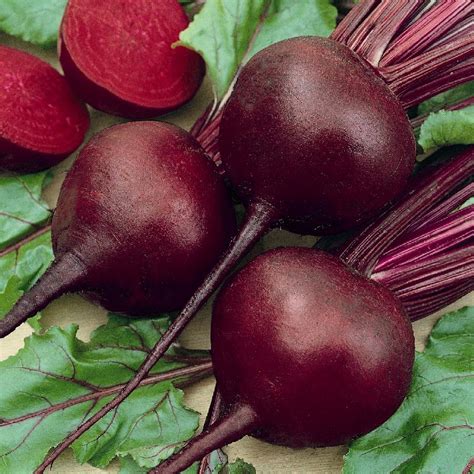
Detroit Dark Red is the beet many of us picture when we think of a “classic” red beet. Uniform 2–3 inch globe roots, rich dark red flesh, and sweet, tender texture make it a long-time favorite for canning, roasting, and fresh eating.
Below is a concise, ready-to-use variety and growing guide you can drop straight into a catalog, product page, or seed packet.
Quick Variety Snapshot
- Botanical name: Beta vulgaris
- Life cycle in the garden: Cool-season crop grown as an annual
- Heirloom status: Open-pollinated, non-GMO heirloom dating to 1892
- Days to maturity: About 55–60 days from direct sowing
- Root size and shape: Smooth, round roots about 2–3″ across
- Flesh color: Deep, uniform dark red with fine texture
- Flavor: Sweet, classic beet flavor; excellent for table use and canning
- Greens: Dark green tops with red veins; tender and flavorful, used like Swiss chard or spinach
- Light: Full sun to light shade
- Use: Fresh eating, roasting, pickling, juicing, freezing, and greens
From Motor City to Backyard Garden
Detroit Dark Red was introduced in 1892 by the D.M. Ferry Seed Company of Detroit, Michigan. Over time, gardeners started calling any good red beet a “Detroit” because the most reliable strains came out of the Motor City.
This variety has stayed in steady production for more than a century. It earned that place by being dependable in home gardens and market rows An Heirloom Made for Crunchy Dill Jars, with roots that size up evenly, hold color in the jar, and keep good flavor in storage. Detroit Dark Red is open-pollinated and non-GMO, so seed can be saved if plants are isolated from other beet and Swiss chard varieties.
How We Grow Detroit Dark Red
Timing and climate
Beets are cool-season vegetables. They germinate once soil reaches about 40°F, but they sprout fastest and grow best when soil is closer to 55–75°F and daytime air stays under about 80–85°F.
For most U.S. gardens:
- Spring sowing: Direct sow 2–4 weeks before your average last frost date.
- Fall sowing: Sow again about 8–10 weeks before your first expected fall frost for a late crop.
In very mild climates, beets can be sown in fall and grown through winter.
Soil preparation
Detroit Dark Red pushes down a strong taproot, so loose soil really pays off. Beets like:
- Deeply dug or raised beds
- Sandy or loamy soil with plenty of organic matter
- pH around 6.2–7.0, with good drainage
Work in finished compost before sowing and use a balanced or low-nitrogen organic fertilizer. Too much nitrogen can give big leafy tops and small roots.
Sowing the seed
Detroit Dark Red is almost always direct-sown.
- Row spacing: About 12″ between rows or bands of seed
- Seed depth: ½” deep in fine, moist soil
- In-row spacing at sowing: About 1″ apart; beet “seeds” are actually clusters, so several seedlings may come from each one
Firm soil gently after sowing so the seed has good contact with moisture.
Keep the top layer of soil consistently damp until seedlings emerge. Germination usually takes 5–21 days, depending on soil temperature and moisture.
Thinning and basic care
Once seedlings have a couple of true leaves, thin them:
- Final spacing: 3–4″ between plants for full-size roots; closer spacing if you mainly want baby beets or greens (UC Agriculture and Natural Resources)
Thinnings make great mini greens and baby beets for early harvest.
Keep plants evenly watered. Like most root crops, beets respond well to about 1″ of water per week from rain or irrigation. Uneven moisture can make roots tough or cause cracking. A light mulch helps hold soil moisture and keep roots cool.
Harvest and Kitchen Use
When to pull the roots
Detroit Dark Red reaches full size in about 55–60 days, but you can pull baby beets sooner. Most gardeners harvest when roots are golf-ball to small tennis-ball size, roughly 1½–3″ across. At this size, the texture stays fine and tender and the internal color is rich and uniform.
Use a fork or trowel to loosen the soil beside the row, then lift roots by the tops. Avoid hard yanking, which can snap the greens off.
Using the roots
Detroit Dark Red is very versatile in the kitchen.
- Fresh: Grated into salads or slaws, or sliced thin and served raw for a sweet, earthy crunch.
- Cooked: Roasted wedges, boiled or steamed slices, or classic buttered beets.
- Canned or pickled: Uniform 2–3″ roots pack well in jars and hold color and texture during canning.
- Frozen: Cubes or slices can be blanched and frozen for later soups and sides.
Do not forget the greens
The tops are a bonus harvest. The deep green leaves with red midribs cook down like Swiss chard or spinach. Young leaves are tender in salads. Mature leaves braise well with garlic, oil, and a bit of stock.
To keep roots growing, harvest only a leaf or two from each plant at a time.
Simple storage
For short-term storage, trim tops to about 1″ above the crown, keep the roots unwashed, and store them in a loose bag or bin in the refrigerator. For longer storage, beets hold well in a cool, humid place such as a root cellar, sometimes for several months if kept just above freezing and not allowed to dry out. (SDSU Extension)
Why Detroit Dark Red Earns a Spot Every Season
Detroit Dark Red stays popular because it is steady and forgiving. It handles a wide range of soils when they are well prepared. It fits into tight garden plans as both a root crop and a steady source of greens. It matures quickly enough to work as an early spring planting, a mid-season filler, or a fall crop.
When we sow a row of this old Detroit beet, we get more than just roots. We get a piece of seed history, a reliable pantry staple, and a bright splash of color in both garden beds and jars on the shelf.
Detroit Dark Red is the beet many of us picture when we think of a “classic” red beet. Uniform 2–3 inch globe roots, rich dark red flesh, and sweet, tender texture make it a long-time favorite for canning, roasting, and fresh eating. Below is a concise, ready-to-use variety and growing guide you can drop straight…
Detroit Dark Red is the beet many of us picture when we think of a “classic” red beet. Uniform 2–3 inch globe roots, rich dark red flesh, and sweet, tender texture make it a long-time favorite for canning, roasting, and fresh eating. Below is a concise, ready-to-use variety and growing guide you can drop straight…