Holiday Leftovers: How to Store and Reheat Food Safely
The meal is done, the table is full of plates and the fridge is about to get busy. Leftovers can give us a few more good meals. A little care now will make those meals safer, too.
The main task is simple: get perishable food cold soon. Then use it within a safe time. We can make room, set a timer and pack the food before the day gets away from us.
Start the clock when food comes out
Do not leave cooked meat, stuffing, gravy or other perishable dishes at room temperature for more than two hours. If the air is above 90°F, that limit is one hour. This includes time on the table and time spent packing.
Set a timer when the food comes off the heat or out of the fridge. It is easy to lose track while we talk. If the food has been out too long, throw it away. Heating it later does not make that risk disappear.
The USDA guide to leftovers gives the time and temperature rules. Keep the fridge at 40°F or below and the freezer at 0°F or below.
Make room before the meal
A day or two ahead, clear out old food and find space for the dishes you plan to save. Check that the fridge door can close and that cold air can move around the containers. A fridge that is packed too tight may not cool well.
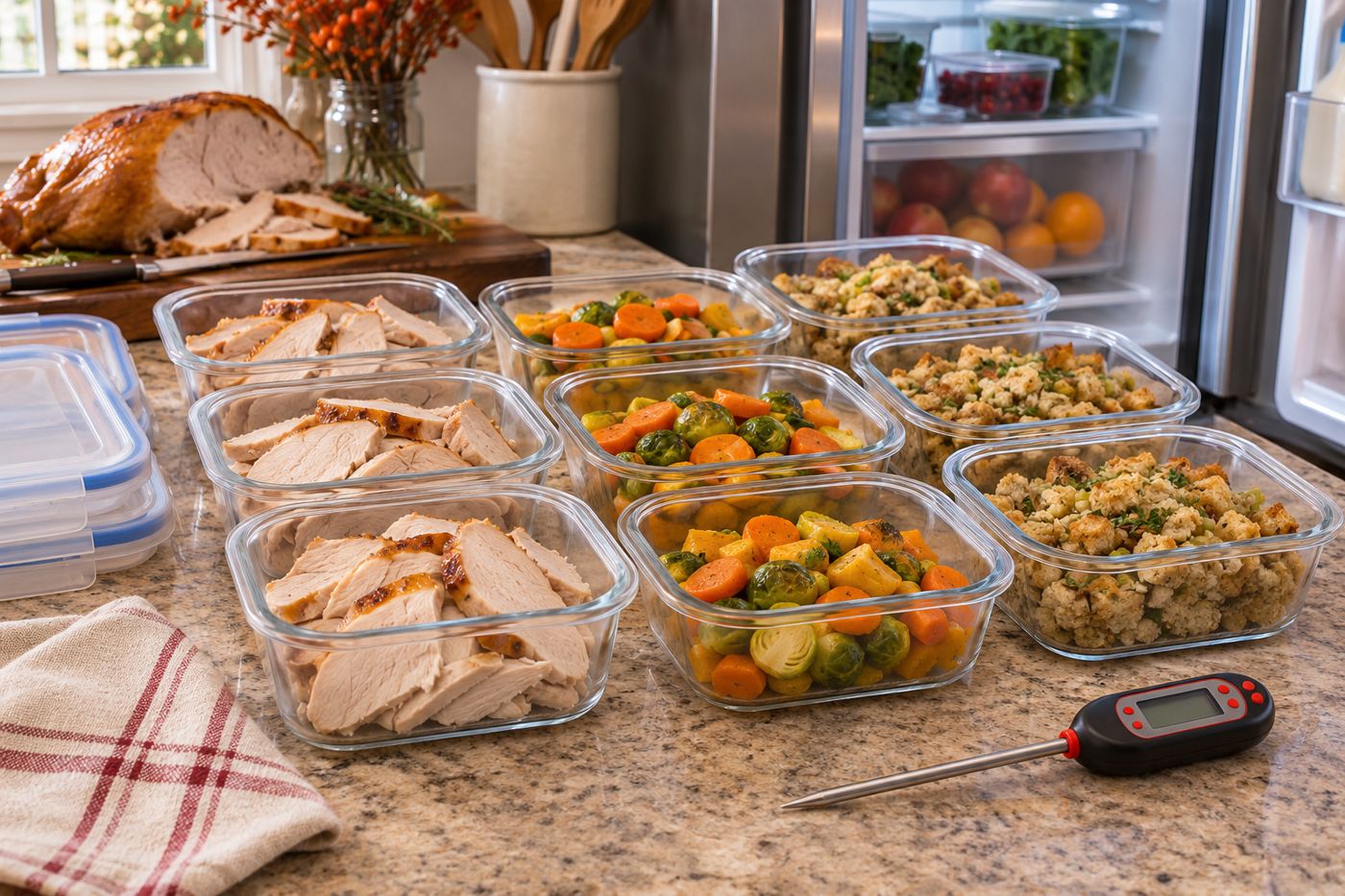
Wash your hands, then set out clean shallow containers and lids. Have a marker ready. Small portions cool faster than one deep pot of hot food. You do not have to wait for hot food to cool all the way on the counter.
Carve the turkey off the bones and put it into shallow containers. Pack stuffing, gravy and sides in their own small containers. Put them in the fridge promptly. Leave room around them for air to move.
If you use a food thermometer, wash it between checks. A digital food thermometer can help you check food when you reheat it. As an Amazon Associate, we may earn from qualifying purchases.
Label what goes in
Write the name of the dish and the date on each lid. Put the oldest food where you can see it. That small step makes it much easier to plan lunch before the safe window runs out.
The USDA advises using safely stored leftovers within three to four days. If you will not eat them in that time, freeze them promptly. Freezing can keep food safe longer, though taste and texture can change over time.
The clock starts with the first meal. It does not reset when we move food to a new box. If you do not know how long a dish sat out or how old it is, do not taste it to test it. Throw it out.
If you plan to freeze a dish, pack it in a small, freezer-safe box. Leave a little room for the food to expand. Add the date and the name. That way you can find what you need without a long search through the freezer.
A fridge thermometer can help you check the air inside. Put it where you can read it and check it from time to time. Do not guess the temperature by how cold a shelf feels.
Keep the trip home cold
Sending food home with a guest is a kind idea. Give them a small, closed container and tell them when the food came off the table. Ask them to put it in the fridge as soon as they get home.
For a longer drive, use an insulated cooler with plenty of ice or frozen packs to keep cold food at 40°F or below. The time food spent out at your home still counts. Do not use a cooler to save food that has already been out too long.
If a guest has a long drive and no way to keep food cold, it may be best to leave it behind. A warm car is not a safe place for a box of turkey.
This USDA video covers turkey care and the steps to put leftovers away.
Reheat only what you plan to eat
Reheat leftovers to 165°F throughout. Use a food thermometer in the thickest part and check more than one spot. Bring sauces, soups and gravy to a rolling boil when reheating them.
If you use a microwave, cover and stir the food so it heats more evenly. Follow the microwave’s rest time, then check the temperature in several places. Cold spots can remain even when the outside feels hot.
Do not use a slow cooker to reheat leftovers. Food may stay at unsafe temperatures too long. Heat it on the stove, in the oven or in the microwave, then serve it hot.
Turn a small amount into a meal
A little turkey can go into soup, a sandwich or a warm bowl with vegetables. Use food that was chilled on time and is still within its safe storage window. Heat the parts that need reheating all the way through.
If you want a crisp side, our guide to keeping fried food crisp has tips on racks and steam. Keep hot food hot and cold food cold while you serve it.
Pack only what you need for each meal. That way the rest can stay cold. Set the serving dish back in the fridge within the time limit rather than leaving it on the table all afternoon.
What if the power goes out?
Keep the fridge and freezer doors closed as much as you can. The time food stays safe depends on the fridge, the room and how long the power is out. Use a thermometer and follow food safety guidance before you keep or toss food.
Our guide to food safety during a power outage explains the first steps. Le Bun also covers food storage during a winter power cut.
When in doubt, throw it out
Food can look, smell and taste fine even when it is not safe. Do not use a quick taste as a test. If you know food was too warm for too long, let it go.
A timer, clean containers and a date on the lid make a good start. Put the food away on time, keep it cold and use it soon. Then we can enjoy the next meal with less guesswork.
Keep holiday leftovers safe with simple steps for cooling, storage, travel and reheating. Know when to eat, freeze or throw food away.
Keep holiday leftovers safe with simple steps for cooling, storage, travel and reheating. Know when to eat, freeze or throw food away.