Where to See Polar Bears in Alaska (Best Places, Best Time, and Simple Planning Tips)
Seeing a polar bear in Alaska feels unreal.
It is big. It is quiet. It looks slow. But it is not.
Even more, polar bears live in a small slice of Alaska. Most trips do not reach that far north. So the trick is simple.
We go where the bears are.
In Alaska, that mostly means two places. They are both on the Arctic coast. They are both remote. And they both ask us to be careful and respectful.
Are There Wolves in Alabama? Let’s walk through the best spots, the best season, and the safest way to do it. 🐻❄️
First, the simple truth about polar bears in Alaska
Polar bears are an Arctic animal. In Alaska, that means the far north.
They spend most of their lives on sea ice. But when the ice pulls back, some bears come closer to shore. That is when we may see them.
Alaska wildlife agencies also make this clear. Opportunities for visitors are limited, and they are centered around two Arctic communities.
So we plan around that reality instead of fighting it.
The two best places to see polar bears in Alaska
1) Kaktovik (Barter Island)
This is the most reliable place for many visitors.
Kaktovik sits on Barter Island, near the Beaufort Sea, inside the Arctic National Wildlife Refuge area. During the ice-free period, many bears gather along the coast near Barter Island. This tends to happen between August and October.
Why Kaktovik works so well
- Bears may rest on barrier islands near town during late summer and early fall
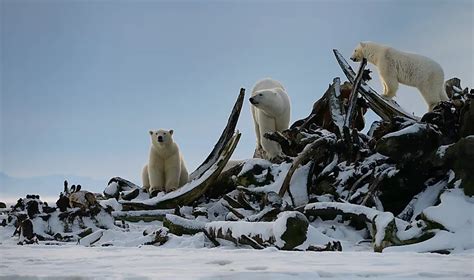
- Some bears come near the village to feed on remains from local subsistence bowhead whale harvests
- Many visitors go in September, when sightings are often the main draw
What the experience feels like
Kaktovik is small. Services are limited. Weather rules everything. But most of all, the setting is pure Arctic coast. You may watch from a boat with a local guide. You may see bears walking a beach, swimming, or resting near the shoreline.
This is also a place where local life comes first. Subsistence activity is not a show. It is food, culture, and community. So we keep our distance and follow local direction.
2) Utqiagvik (also known as Barrow)
Utqiagvik is the northern edge of the map. It is also one of the few places where polar bear viewing may be part of a summer visit.
State wildlife info lists Utqiagvik as one of the two communities that offer limited chances to view polar bears.
Travel Alaska also notes that, in summer, tour operators may offer packages that can include polar bear viewing.
Why Utqiagvik can be a good fit
- You can pair wildlife viewing with culture, history, and Arctic Ocean scenery
- Tours are often built around the long daylight season and summer travel patterns
Utqiagvik is not a casual road trip. There is no road access. You get there by plane.
That one detail changes everything about planning.
Best time of year to see polar bears in Alaska
For most people, the clearest window is late summer into early fall. 57 Shots In 90 Seconds: The Hillsville Courthouse Massacre Of 1912.
Alaska wildlife viewing info explains that many bears gather near Barter Island during the ice-free period between August and October.
That lines up with how most Kaktovik viewing trips are planned.
A simple season guide
- Late August to October: Best-known window for Kaktovik and Barter Island viewing
- September: A very common month for visitors aiming for bears near Kaktovik
- Summer months: Tours in Utqiagvik may include polar bear viewing as part of a package visit
Weather still decides the day. Fog, wind, and storms can slow or stop flights. So our plans stay flexible.
How to get to polar bear country in Alaska
This part is easy to say and hard to do.
These towns are remote. They have limited rooms. They have limited services. And they are not built for big crowds.
Getting to Kaktovik
Access is typically by small aircraft or charter flights, and delays are common.
That means we build in buffer time. We also keep our plans simple.
Kaktovik has very limited visitor amenities, including lodging and rentals.
So booking early matters.
Getting to Utqiagvik
Utqiagvik is not reachable by road. The only way in is by plane.
Travel Alaska notes regular flight service from Anchorage and Fairbanks via Alaska Airlines and other regional carriers.
In other words, flights are the backbone of the trip.
What “good” polar bear viewing looks like
Polar bears may look calm. But the official guidance is blunt.
Viewing polar bears in the wild is dangerous. Their behavior can change fast.
The goal is not to get close. The goal is to be safe and not disturb the bear.
Follow the core rules that keep bears and people safe
Best-practice guidance for viewing includes these points:
- Stay with your guide and stay within earshot
- Keep noise low and avoid sudden movement
- Remain in your vehicle or boat unless your guide says otherwise
- Never herd, chase, or displace bears
- Never attract bears with food, smells, or sounds
- Never separate a mother from cubs
- Never block the movement of swimming bears
There is also a key point people miss.
There is no one legal distance that is always “safe.” The guidance explains that each bear reacts in its own way. If the bear responds to your presence, you stop. If signs of stress continue, you retreat.
So we watch the bear. We do not push the moment.
Drones, planes, and boats need extra care
If aircraft are involved, U.S. Fish and Wildlife Service guidance says to keep at least 1,500 feet of altitude and a half mile of horizontal distance from bears, except for takeoff and landing.
For watercraft, the guidance highlights swimming bears. It says to let them continue unhindered and never approach, herd, chase, or lure them.
Instead of chasing a photo, we protect the space.
Why guided trips matter in Kaktovik
Kaktovik sits in a sensitive place.
Barter Island is within the Arctic National Wildlife Refuge, and polar bear management involves U.S. Fish and Wildlife Service. The state wildlife viewing info explains that a commercial guided polar bear viewing program was developed to meet the Marine Mammal Protection Act and the Endangered Species Act.
The same source also notes that viewing near Kaktovik and on Refuge waters has increased a lot over time, which raises risks for people, bears, and local subsistence activity. A Morning at the Garden Center: Discovering New Perennials and Planting Joy.
So the responsible move is simple.
We view with a guide, and we make sure that guide is operating legally and has a safety plan.
The best-practices sheet also says that if you view polar bears from the water or use a water taxi, you should hire an authorized business with trained operators.
What to pack for polar bear viewing in Alaska
The Arctic coast does not care if we packed light.
We plan for cold, wind, wet, and sudden change.
A simple packing list that works
- Warm layers (base, mid, and a wind shell)
- Waterproof outer layer
- Hat and gloves
- Sturdy shoes with good grip
- Binoculars
- Camera gear you can handle with gloves
- Spare batteries, kept warm in an inside pocket
- Any personal meds you need, with extras
Travel in tiny towns is different. So we also pack patience. We also keep our schedule loose.
Costs and planning, without the stress
Polar bear trips in Alaska can cost a lot. The biggest reasons are simple.
- Remote flights
- Limited lodging
- Short season
- Weather delays
Kaktovik, in particular, has very limited rooms and services.
So we book early, and we do not over-pack the itinerary.
A calmer way to plan
- Keep extra days on both ends for weather
- Avoid tight connections
- Choose tours that build in safety and local rules
- Treat the bear sighting as a hope, not a promise
How to take great photos without being “that person”
Good polar bear photos come from calm choices.
We use a longer lens. We keep the boat steady. We stay quiet. We let the bear set the pace.
Best-practice viewing guidance also says bears can react more to noise and fast approaches than to slow, low-noise movement.
So we slow down.
Low light is also common in Arctic shoulder seasons. The guidance suggests extra caution during low light, like having a dedicated observer watching for bears from all directions.
That is not a small detail. It is a safety habit.
Respecting the place is part of the trip
When we visit Kaktovik or Utqiagvik, we are guests.
NBC Comedy Shows: The Big Laughs We Grew Up With, And The New Ones We’re Watching Now. People live there year-round. They work hard. They have deep traditions. Some activities, like subsistence whaling, are vital.
The best viewing trips make room for that. They do not compete with it.
In other words, the best polar bear trip is not just about the bear. It is about how we show up.
A quiet Arctic promise
We travel far north to see a wild animal living a wild life.
We keep our distance.
We stay safe.
We do not disturb the bear.
That is how this kind of travel lasts.
Seeing a polar bear in Alaska feels unreal. It is big. It is quiet. It looks slow. But it is not. Even more, polar bears live in a small slice of Alaska. Most trips do not reach that far north. So the trick is simple. We go where the bears are. In Alaska, that mostly…
Seeing a polar bear in Alaska feels unreal. It is big. It is quiet. It looks slow. But it is not. Even more, polar bears live in a small slice of Alaska. Most trips do not reach that far north. So the trick is simple. We go where the bears are. In Alaska, that mostly…